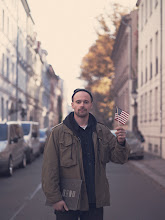
Walker Evans....from the cradle to the factory to the grave.
"Worried that you are falling behind, not living as well as you once did? Or expected to?
That you are going to have to work extra hours, or take a second job, just to stay even with your bills?
That the company you have worked for all these years may dump you for a younger person?
Or that the pension you have been promised may not be there when you retire?
Worried, if you are on the bottom rung of the economic ladder, that you will never see a middle class lifestyle?
Or, if you are a single parent or part of a young working family, that you will never be able to save enough to buy a home? That you are paying more than your fair share of taxes?
Worried that the people who represent you in Congress are taking care of themselves and their friends at your expense?
You are right. Keep worrying."
-A selection from America: What Went Wrong by Donald L. Bartlett and James B. Steele, Pulitzer Prize winning reporters of the Philadelphia Inquirer.
America: What Went Wrong is an expanded version of a nine part series originally published by the Philadelphia Inquirer in October 1991 and while written nearly 20 years ago this brilliant journalism uncovers how the politicians and dealmakers on Wall Street have rigged the game to benefit the rich, while the middle class and everyone else remain powerless and sink deeper into the bottom economic brackets. This book is perhaps one of the most relevant studies out there in terms of providing a back drop to where we are RIGHT NOW and how we got ourselves into this mess. The politicians and executives have been playing with a marked deck for decades while we sit here watching Monday night football drinking Bud Light as we work our bodies and souls to the bone all for a hot and a cot and a seat on the express train to the graveyard. I am boiling inside.
I am currently reading these and recommend them to all:
-American Project: The Rise and Fall of a Modern Ghetto, By Sudhir Alladi Venkatesh
-Tally's Corner, By Elliot Liebow
-Subliminal Seduction, By Wilson Bryan Key
-Code of the Street, By Elijah Anderson
-When Work Disappears: The World of the New Urban Poor, By William Julius Wilson
-The Death and Life of Great American Cities, By Jane Jacobs
Instead of providing an Amazon link to these titles, I encourage all to go to your neighborhood mom and pop locally owned book store and buy them there.
3/7/09
It Takes Americans To See The Absolute Worst Before They Can Identify A Problem: A Required Reading List

9/16/08
Feeding The Insatiable Hunger Of These Wild And Crazy Photobook Lovers
Yes, there can be an over saturation of recycled information that circulates the blogs these days but sometimes that can be a great thing in terms of getting the word out, and, after all, that is the great power and resource of the blog, knowledge. And Jeffrey Ladd's (of 5B4) new on-going publishing project called Books on Books, which is "dedicated to making rare and out-of-print photography books accessible once again to photobook enthusiasts," is a great thing, no doubt, and I hope it is much-a-talked about. Ladd, one of the leading voices in the fine art photography book world, has a keen eye on not only the future direction of the photobook world as the photobook market has gone on steroids and become bigger, stronger and more productive than ever, but also has a deep understanding of where it started and its history. Ladd states in this announcement that he began this project:
"in order to fill a void. The void being that the outrageous prices demanded by the collector's market and scarcity of these titles makes them out of reach to most students, teachers, scholars, and photobook enthusiasts."
"I have a strong belief that people, especially students, should be able to access these great works of art to learn from them and that a valuable part of the dialogue with this medium has been stunted because of that limited access. This series is our contribution to continuing that dialogue."
In a day when there are more and more new photobooks out each season and the accessibility and low cost of online self publishing has made it so many are running out of shelf space, as one can easily get lost in the "what's next, who's doing what," and the "digging in the crates" attitude is abandoned just trying to keep up. My hat is off to Ladd and the project. Don't get me wrong I am right there along with everyone else fork and knife in hand barking, "feed me, feed me," Lil Wayne may be the rapper eater, but I am the photo book eater. It is very refreshing to know there is a new chef in town and we are now able to get our hands on some of those classics.
Lately I have been sneaking back into NYU in order to look at books at the Tisch Photo Department Library that I cant find anywhere else (they have a great collection and is worth checking out). Maybe, I am just a loser but I spent many recesses and lunches in middle school in the library, losing myself in my books. And in college after class I would duck into the library and sit next to a pile of photo books for hours. One of my favorite books at the NYU library was a book on South American train surfers. The cover had a picture of the train surfers in action and I believe was teal in color, most of the photographs were taken at waist level. I can't find this book anywhere! Anywhere! Help me!
Hey Jeff or anyone else if you know the title or photographer of this series please let me know. Its been driving me crazy all summer. Here is the only picture from the book I could find scouring Google:
7/28/08
How The Other Half Lives


Jacob Riis is another photographer who in addition to taking very important photographs was also a great writer. His series "How The Other Half Lives" has had a profound impact on my work. His efforts to ask questions with his images and words and subsequently make change is very inspiring. The same streets that these images were made a 100 years ago are now some of the hottest downtown real estate where nothing new goes below 1.2. If Riis saw Orchard Street today I think he would have a heart attack. Here is a selection of "How The Other Half Lives"...
"A man stood at the corner of Fifth Avenue and Fourteenth Street the other day, looking gloomily at the carriages that rolled by, carrying the wealth and fashion of the avenues to and from the big stores down town. He was poor, and hungry, and ravaged. This thought was in his mind: "They behind their well-fed teams have no thought for the morrow; they know hunger only by name, and ride down to spend in an hour's shopping what would keep me and my little ones from want a whole year." There rose up before him the picture of those little ones crying for bread around the cold and cheerless hearth-then he sprang into the throng and slashed about him with a knife, blindly seeking to kill, to revenge. The man was arrested, of course, and locked up. To-day he is probably in a mad-house, forgotten. And the carriages roll by to and from the big stores with their gay throng of shoppers. The world forgets easily, too easily, what it does not like to remember."

5/19/08
Birney, Where Have You Gone?


As I concluded last review, I mentioned my love of disappearing into another world. Several summers ago I showed the work I was doing in New Orleans to David Houston at the Ogden Museum. After we talked about my work, David kindly offered to give me a tour of the museum. I accepted. On this tour David introduced me to Birney Imes and his images from juke joints in the south. This work instantly grabbed a hold of me and pulled me into another place, right then and there. And it has not let go since. One of my favorite books of all time is Birney Imes' Juke Joint. In the Afterword, Imes writes:
"Growing up white in the segregated South of the 1950s, I was only vaguely aware of another culture, another world that existed in the midst of my own. As a child I saw things out of the corner of my eye, but the question of race was one I never had to face straight on. When my high school was integrated in the late sixties, the veil began to part, and I started to see the richness and diversity of a culture that till then had been hidden from me. When I began photographing six or seven years later, it was in part my wish and my need to overcome this ignorance that helped make my choice of subject an obvious one."

Houston told me that after making this work Imes has not really made many images. It's a shame really. Imes has produced some of the most beautiful images I have ever seen here and even more importantly Imes uses the camera to cross boundaries, to learn, to better understand a world and culture in which he was an outsider and in the process understand a part of himself. Sometimes a real and sober understanding of the world seen through the doors a camera can unlock makes picking up that camera again a difficult task.


5/12/08
Anywhere and Everywhere

There is perhaps no better time for the 50th Anniversary release of Robert Frank's "The Americans" than now. America is on a slippery slope quickly approaching a cross roads that will surely be marked by change as many issues which have been brewing on the back burner and swept under the carpet can no longer be ignored. America's place now in many regards mirrors a time and place in America ('55-'56 to be precise) when Frank made "The Americans" images as underlying issues of race and gender inequality and war and fear of foreign power sparked a fire that would soon erupt and impact a nation for years to come. The despairing gap between the American identity and the American reality fueled Frank's vision. In his Guggenheim Fellowship Proposal that would support the work Frank expressed his intention to:
“To photograph freely throughout the United States, using the miniature camera exclusively. The making of a broad, voluminous picture record of things American, past and present. This project is essentially the visual study of a civilization and will include caption notes; but it is only partly documentary in nature: one of its aims is more artistic than the word documentary implies.”
“'The photographing of America' is a large order—read at all literally, the phrase would be an absurdity. What I have in mind, then, is observation and record of what one naturalized American finds to see in the United States that signifies the kind of civilization born here and spreading elsewhere. Incidentally, it is fair to assume that when an observant American travels abroad his eye will see freshly; and that the reverse may be true when a European eye looks at the United States. I speak of the things that are there, anywhere and everywhere—easily found, not easily selected and interpreted. A small catalog comes to the mind’s eye: a town at night, a parking lot, a supermarket, a highway, the man who owns three cars and the man who owns none, the farmer and his children, a new house and a warped clapboard house, the dictation of taste, the dream of grandeur, advertising, neon lights, the faces of the leaders and the faces of the followers, gas tanks and postoffices and backyards . . . "
The honesty of Frank's images is what set them apart. The book of 83 images first published in 1958 by Robert Delpire in Pairs would eventually set its self apart from all other photography books of its kind for the next 50 years as it has gone on to influence future generations of photographers from Shore to Sternfeld to Soth. In an essay about his time spent with Frank in Germany at the Steidl printing press Joel Sternfeld remembers:
"When I was becoming a photograper in the late 1960's, Frank's book, 'The Americans' was already a landmark-that's much too weak a word but what other word for a body of work that changed the course of the river of Photography in a way that it could never take the old course again.
I would look at it before I went to sleep and in the morning I would reach for it like a smoker reaches for a cigarette. I needed to see it again. The country was so bleak in those sooty pages, each one an artifact ripped from the landscape and brought straight to the bindery. Frank had found a way to give form to the formless lives that went unmilled in America."
The Steidl catalog notes that: "Since 1959 'The Americans' has been reprinted by different publishers, in multiple languages and formats. Frank has had varying influence on these editions: some were printed without his input, approval or knowledge. When the Steidl edition of "The Americans" was printed, Frank' was involved in every step of its design and production. The 83 photographs were scanned in tritone from vintage prints in Frank's collection, which revealed that many images in past editions were actually crops of the originals. For the Steidl book Frank studied revised these crops and in many cases included the ful photographs. Frank personally oversaw printing on July 18, 2007, inspecting and approving each sheet at Steidl's press in Gottingen."
The new edition of "The Americans" published by Steidl and National Gallery of Art, Washington and distributed by D.A.P./Distributed Art Publishers, Inc. comes out May 15th and its precious small size makes it a treasure in your hands. Get yours now at the getting place.
This marks the first of a new series of book reviews that I will doing on this blog. I think it is always interesting to hear photographers talk about the books that have impacted their work and why a particular title is meaningful to them. Some books will be new and fresh off the press while others will be old and out of print. There is nothing greater than spending hours at the book store or in bed surrounded by all your favorites, running away and escaping into another world, each title a passageway to a new journey, each page a new and thrilling experience.
2/21/08
How To Take A Picture
My very first class at my first year of art school was with Phil Perkis. Wow. What a world he revealed to me. Here is an excerpt from his book Teaching Photography Notes Assembled:
"To simply see what something(s) looks like: the light, the space, the relationship (visual) between the distances, the air, the tones, the rhythms, the texture, the contrasts, the shape of movement… the things themselves… not what they might mean later, not socially, not politically, not psychologically, not sexually (a cigar is not even yet a cigar).
Not to name, label, evaluate, like, hate; no memory or desire. Just to see.
This is the hardest thing to do, but that’s all that can be photographed. The camera records the light emitted from the surface of that which is placed within its field of view. P e r i o d.
To experience the meaning of what is. To stay with it for even a few seconds is no small task. The sound of voice without language, a musical line, a ceramic vessel, a non-objective painting. The presence of it, the weight of it, the miracle of its existence, of my existence. The mystery of the fact itself.
Maybe it’s the second law of infinity where you keep going halfway there forever. Cutting in half to eternity, and ‘grace’ is needed to jump the gap.
I keep taking pictures hoping something will help me across."